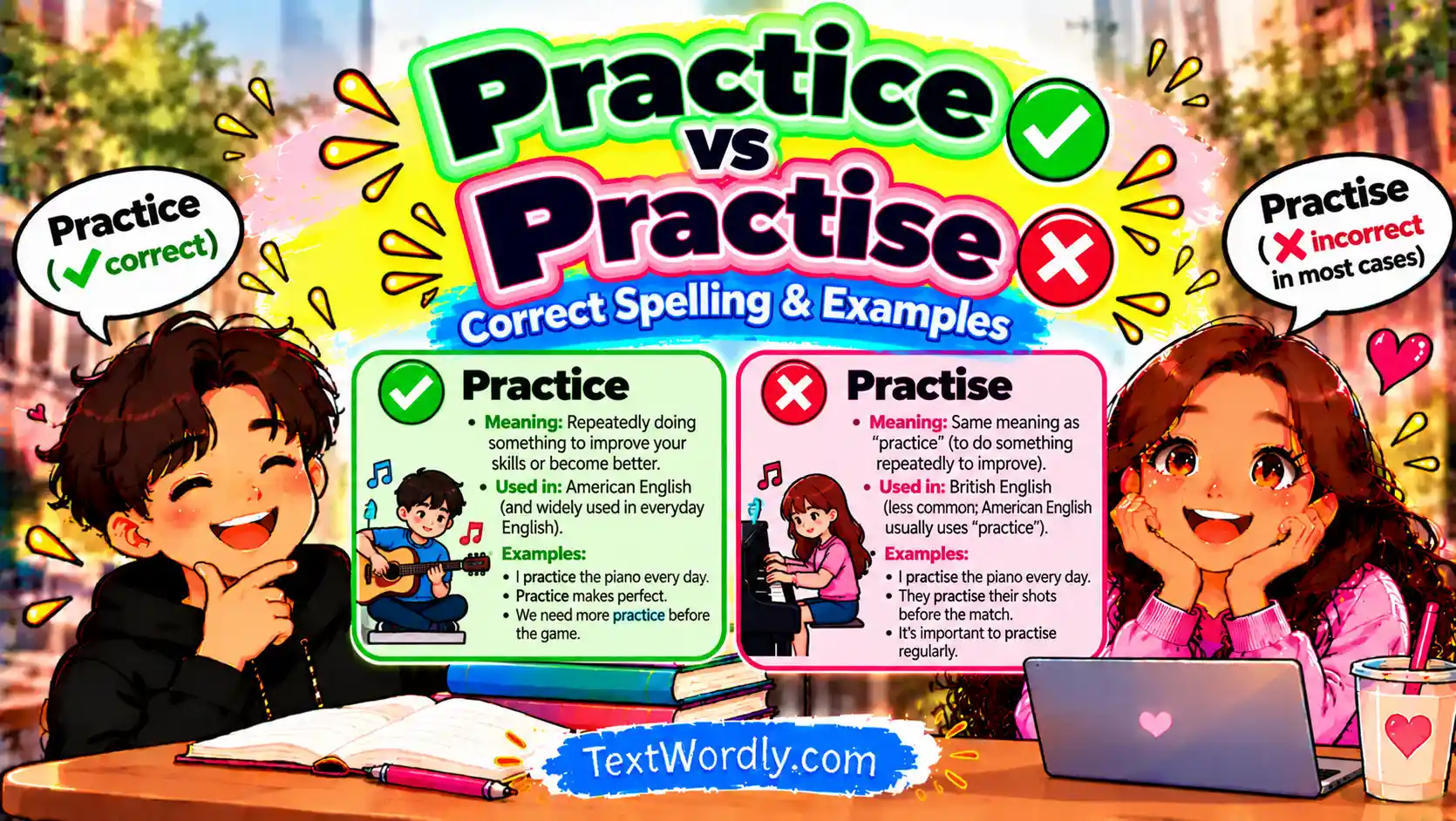
Learn why practice is standard in American English, how British English uses practise as a verb, and how noun and verb forms differ.
Practice vs practise is a common English usage topic. These words can be confused because their spelling, pronunciation, or grammatical behavior is similar. The easiest solution is to learn each word’s role and then apply a short context test.
Practice vs Practise: American English Rule
In American English, practice is used for both the noun and verb. You can say “I need more practice” and “I practice every day.” The spelling stays the same.
In British English, practice is generally the noun, while practise is the verb. This distinction is a spelling convention, not a difference in the underlying meaning.
American English Examples
- She needs more practice.
- He practices the piano every morning.
- Regular practice improves a skill.
- They practice speaking English together.
Practice vs Practise: A Quick Memory Tip
If you are writing for an American audience, use practice for both noun and verb. If you are following British English, remember practice for the noun and practise for the verb.
Definitions and Word Roles
Start by identifying what each word means and how it functions in a sentence. Meaning should come before spelling or pronunciation. This makes the rule easier to apply in both casual and formal writing.
Common Mistakes
- Choosing a word only because it sounds right.
- Ignoring the noun or verb that follows.
- Applying a rule without checking context.
- Confusing American and British English conventions.
- Using a familiar form without proofreading the complete sentence.
How to Remember the Difference
Use a replacement test. Read the complete sentence and ask what the word is supposed to mean. Then replace it with a simple word or phrase with the same function. If the sentence changes meaning, choose the other form.
Quick Comparison
| Question | What to check |
|---|---|
| What does the word mean? | Read the surrounding sentence. |
| What grammatical role does it have? | Check whether it acts as a noun, verb, adjective, or adverb. |
| Is the usage regional? | Check American vs British English conventions. |
| Still unsure? | Use a reliable dictionary. |
Examples in Everyday English
Clear examples are useful because grammar rules become easier to remember when connected to normal situations. Read the examples aloud, then create one sentence of your own using each form.
- The writer checked the sentence before publishing.
- The student used the correct word in an email.
- The editor explained why the original form was confusing.
- The reader used context to understand the meaning.
- The final sentence was clear and natural.
- The teacher gave another example to make the rule easier.
American English Usage
This guide follows standard American English where regional spelling or usage matters. Some English forms differ across countries, so a form that is normal in British English may not be the preferred form in American writing. When the audience is American, follow the American convention consistently.
Practice: Choose the Correct Word
Test yourself before checking a dictionary. Identify the meaning first, choose the word, and then read the sentence again. This habit improves accuracy more effectively than memorizing isolated spellings.
- Read the sentence once for meaning.
- Identify the grammatical role.
- Apply the specific rule.
- Check the final sentence for natural usage.
Related Text Wordly Guides
Your vs You’re · Bring vs Take · Good vs Well · Affect vs Effect · Has vs Have
Trusted Dictionary and Writing Resources
Merriam-Webster · Cambridge Dictionary · Oxford Learner’s Dictionaries · Britannica Dictionary · Grammarly Writing Resources
Frequently Asked Questions
Why are these words confusing?
Similar spelling, pronunciation, or related meanings can make the forms easy to mix up.
What is the fastest way to choose the correct word?
Identify the intended meaning and grammatical role before choosing the spelling.
Does American English matter?
Yes. Some spelling and usage conventions differ between American and British English.
Should I check a dictionary?
Yes. A reputable dictionary can confirm meaning, pronunciation, usage notes, and regional conventions.
Practice vs Practise: Detailed Usage
For a U.S. audience, practice is the spelling to use for both the noun and the verb. This is one reason American writers may find the British distinction confusing. In American English, “practice” can describe repeated training and can also describe the action of training.
Practice as a Noun
- Daily practice improves your skills.
- The team needs more practice.
- She scheduled extra practice before the competition.
- Good practice can build confidence.
Practice as a Verb in American English
- I practice English every morning.
- He practices the guitar after school.
- They practice writing clear sentences.
- She practices the new technique regularly.
Practice vs Practise in British English
British English generally uses practice as the noun and practise as the verb. For example, a British writer may say “I need more practice” but “I practise every day.” The pronunciation is generally similar, but the spelling distinguishes the grammatical roles.
Which Form Should American Writers Use?
If your audience is in the United States, use practice for both roles. Do not change it to practise simply because the word is functioning as a verb. If you are writing for a British audience or following a British style guide, check that guide’s convention and apply it consistently.
Common Mistakes
The most common error for American writers is importing the British verb spelling into U.S. content. The reverse can also cause problems when a British publication requires its own style. Always consider the intended audience before choosing a regional spelling.
Practice vs Practise: Final Review
For American English, the answer is simple: use practice as both a noun and a verb. British English generally uses practice for the noun and practise for the verb. If your website targets U.S. readers, keep the American spelling consistent throughout your content.
Always check the audience and style guide when regional spelling matters. Consistency makes professional writing easier to read and edit.
Practice vs Practise: Editing Checklist
For American English websites, use practice consistently for the noun and verb. A U.S. reader will normally expect “practice English” and “more practice.” If you are producing British English content, follow the British distinction instead and use practise as the verb.
When a client or publication provides a style guide, its regional convention should take priority. Consistency across the same article and website is more important than switching forms without a clear reason.
For Text Wordly’s American English audience, practice is the preferred spelling in both roles. The British spelling difference should be mentioned only when regional usage is relevant to the reader.
Practice vs Practise: Quick Decision Rule
Writing for the United States? Choose practice for both the noun and verb. Writing in British English? Check whether the sentence needs the noun practice or the verb practise. This audience-based rule prevents most spelling errors.
The safest choice for U.S. content is consistent use of practice in both grammatical roles. Check regional style only when the audience or publication specifically calls for British English.
Conclusion
Understanding practice vs practise helps you avoid common English usage errors. Focus on meaning, grammar, context, and regional style rather than relying only on pronunciation. With regular practice, the correct form becomes easier to recognize and use naturally.