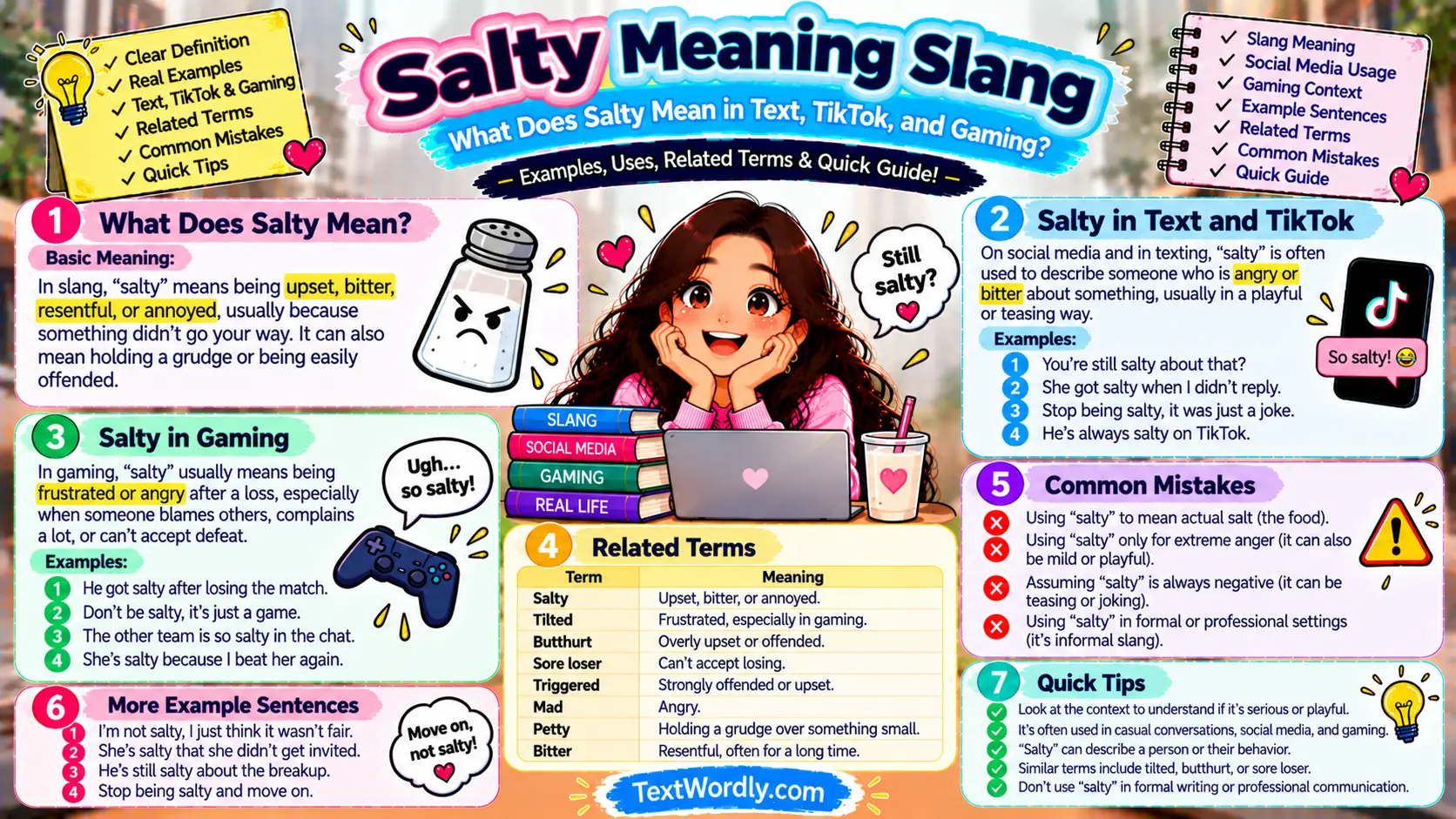
Salty Meaning Slang: Have you ever heard someone say “Why are you so salty? 🧂” or seen a gamer complain after losing a match? The word salty might sound like it describes food, but it has a completely different meaning in modern slang.
Salty means annoyed, bitter, irritated, or resentful, especially when someone reacts negatively to losing, criticism, rejection, or disappointment.
For example, “He’s salty about losing” means he’s upset and possibly complaining about the result.
You’ll hear this expression in text messages, TikTok comments, gaming conversations, and everyday American English. Depending on the situation, it can be playful teasing or a mild insult.
QUICK ANSWER
Salty 🧂 = Annoyed, bitter, irritated, or resentful.
“You’re salty.” — You’re acting upset or resentful.
“Don’t be salty.” — Don’t react bitterly.
“I’m salty about it.” — I’m annoyed about what happened.
TL;DR
Salty describes irritation or resentment, often following disappointment. It’s especially common in gaming, texting, and social media. Calling someone salty can be funny among friends, but it can also dismiss genuine feelings.
1. What Does Salty Mean in Slang?
In American slang, salty describes someone who feels or acts annoyed, bitter, or resentful.
It often refers to the way someone reacts when things don’t go their way.
For example:
“She’s salty because she didn’t win.”
This suggests she’s upset about losing.
“He’s still salty about that argument.”
This means he’s holding onto frustration.
Someone can feel disappointed without being salty. The word often suggests a noticeably negative reaction, such as complaining, blaming others, or expressing resentment.
2. What Does Salty Mean in Text Messages?
In texting, salty usually describes someone’s mood or reaction.
Common Texting Examples 💬
| Message | Meaning |
|---|---|
| “You’re salty 😂” | You’re acting annoyed |
| “Still salty?” | Are you still upset? |
| “I’m lowkey salty.” | I’m somewhat annoyed |
| “Don’t get salty.” | Don’t react bitterly |
| “Why so salty?” | Why are you upset? |
Example Conversation
Alex: “I can’t believe you won again!”
Jordan: “Why are you so salty? 😂”
Jordan is teasing Alex about losing.
The laughing emoji makes the message sound playful, but tone still depends on the relationship.
3. Where Did Salty Slang Come From?
The word salty originally described something containing or tasting like salt.
Over time, English speakers also used it figuratively to describe sharp, rough, or unpleasant attitudes.
The modern slang meaning, involving irritation or resentment, has documented connections to Black American English.
Did TikTok Invent Salty?
No. Salty was used as slang long before TikTok existed.
Is Salty Gen Z Slang?
Gen Z uses it, but the expression is older than Gen Z.
What Does “Jumping Salty” Mean?
This older expression describes becoming angry or irritated. It helps illustrate that emotional uses of salty have a longer history than today’s internet conversations.
4. What Does “Why Are You So Salty?” Mean?
“Why are you so salty?” means someone thinks you’re reacting with unnecessary irritation or resentment.
Example 💬
Mia: “You only won because you got lucky.”
Jack: “Why are you so salty?”
Jack thinks Mia is upset about losing.
The expression can sound funny among friends, but it may feel disrespectful during a serious disagreement.
Remember, being disappointed doesn’t automatically mean someone is salty. The phrase often reflects the speaker’s judgment about another person’s reaction.
5. What Does Salty Mean on TikTok?
On TikTok, salty describes someone who seems annoyed, jealous, or resentful.
TikTok Examples 📱
“He’s salty because his video didn’t go viral.”
The person is disappointed about the result.
“Why are the comments so salty?”
People are responding negatively or argumentatively.
“She’s salty about that trend.”
Someone is expressing resentment or criticism.
The basic definition doesn’t change on TikTok. The platform simply provides new situations where people use the expression.
6. Salty on Snapchat, Instagram, Discord, and Reddit
Salty has a similar meaning across social-media platforms.
| Platform | Example | Meaning |
|---|---|---|
| Snapchat | “You seem salty.” | You seem annoyed |
| “Salty in the comments.” | People are upset | |
| Discord | “He’s salty about the match.” | He’s frustrated |
| “That’s a salty response.” | The reply sounds resentful |
On Discord, salty frequently fits competitive gaming discussions.
On Instagram or Reddit, it may describe arguments, criticism, or perceived jealousy.
The surrounding conversation determines whether the word sounds playful or insulting.
7. What Does Salty Mean in Gaming?
In gaming, salty describes a player who reacts bitterly or angrily after losing or experiencing something frustrating.
Gaming Example 🎮
Player 1: “Good game!”
Player 2: “You only won because your character is overpowered.”
Player 1: “Don’t be salty.”
The first player thinks the second is making excuses.
What Is a Salty Gamer?
A salty gamer might blame teammates, argue with opponents, or repeatedly complain after losing.
However, legitimate criticism of unfair gameplay isn’t automatically salty behavior.
The difference lies partly in how someone expresses their frustration.
8. What Does “Don’t Be Salty” or “Stay Salty” Mean?
These expressions have related but different tones.
“Don’t be salty” means stop reacting bitterly or resentfully.
“Stay salty” is often sarcastic. It suggests the speaker doesn’t care if someone remains upset.
Example
Alex: “That match was completely unfair!”
Jordan: “Don’t be salty. We can play again.”
Here, Jordan is encouraging Alex to move on.
But “Stay salty!” after winning might sound like teasing or deliberate provocation.
Use these phrases carefully, especially when someone is genuinely hurt.
9. Salty vs Bitter: What’s the Difference?
Salty and bitter both involve resentment, but their usual tones differ.
| Word | Typical Meaning | Example |
|---|---|---|
| Salty | Irritated after disappointment | “He’s salty about losing.” |
| Bitter | Deep or lasting resentment | “She’s bitter about the breakup.” |
| Upset | Emotionally bothered | “I’m upset about the news.” |
Salty often sounds casual and may describe an immediate reaction.
Bitter can suggest stronger or longer-lasting resentment.
However, the difference isn’t absolute. Someone can remain salty about something for years.
10. Salty vs Angry, Jealous, Petty, and Pressed
These slang expressions overlap but aren’t identical.
| Expression | Meaning |
|---|---|
| Salty 🧂 | Resentful or irritated |
| Angry 😠 | Strongly displeased |
| Jealous 💚 | Upset about someone’s advantage |
| Petty 🙄 | Overly focused on small issues |
| Pressed 😤 | Noticeably bothered or worked up |
Example
“He’s salty because his friend got promoted.”
This suggests resentment, possibly involving jealousy.
“He’s pressed about every little comment.”
This emphasizes how bothered or defensive he seems.
Salty often focuses on resentment after an unfavorable outcome.
11. What Does Salty Mean From a Guy or a Girl?
The meaning of salty doesn’t change based on gender.
“He’s salty about the breakup.” suggests lingering resentment.
“She’s salty because I canceled.” suggests annoyance about canceled plans.
Does Salty Mean Someone Likes You?
Not necessarily.
Someone might playfully call a crush salty, but the word itself doesn’t indicate romantic attraction.
Is Salty Flirting?
Occasionally, teasing can be flirtatious. However, the relationship, tone, and surrounding message matter more than the word alone.
12. Is Salty an Insult, Joke, or Compliment?
Salty is generally a mild criticism, not a compliment.
Playful 😂
“You’re salty because I beat you!”
Friends might say this jokingly.
Insulting 😬
“You’re just salty because nobody agrees with you.”
This can dismiss another person’s opinion.
Is Salty Offensive?
The word isn’t inherently profanity or a slur.
However, calling someone salty during a serious conversation can sound rude because it suggests their feelings are unreasonable.
13. Realistic Salty Slang Conversation Examples
These fictional conversations demonstrate common usage.
Gaming 🎮
Alex: “That match was unfair!”
Jordan: “You’re just salty because you lost.”
School 📚
Mia: “I deserved the highest grade.”
Jack: “You sound salty about the results.”
Sports 🏀
Alex: “Their team got lucky.”
Jordan: “Still salty about yesterday?”
Social Media 📱
Mia: “Why are those comments so negative?”
Jack: “Some people are salty about the announcement.”
Friendship ❤️
Alex: “You went without inviting me?”
Jordan: “Are you salty about that?”
These examples show how salty describes reactions to disappointment, competition, or feeling excluded.
14. How to Reply When Someone Calls You Salty
Your response should match the situation.
| Someone Says | Possible Reply |
|---|---|
| “You’re salty!” | “Maybe a little 😂” |
| “Why so salty?” | “I’m just frustrated.” |
| “Still salty?” | “No, I’m over it.” |
| “Don’t be salty.” | “I’m disappointed, not bitter.” |
| “You’re acting salty.” | “What makes you say that?” |
Funny Reply 😂
“I’m not salty, I’m just well-seasoned! 🧂”
Calm Reply
“I’m upset about what happened, but I’d rather talk about it.”
If someone is deliberately provoking you, a short, calm response is usually more helpful than trading insults.
15. Common Mistakes When Using Salty Slang
Mistake 1 — Thinking Salty Always Means Angry
Salty often suggests resentment, not simply anger.
Mistake 2 — Assuming It’s Always a Joke
It can be playful, but it may also criticize someone’s behavior.
Mistake 3 — Confusing Literal and Slang Meanings
“These fries are salty.” — The food contains noticeable salt.
“He’s salty about losing.” — He’s irritated or resentful.
Mistake 4 — Ignoring Other Meanings
Salty language can also mean crude or colorful speech, rather than emotional resentment.
Pronunciation
Salty is pronounced approximately SAWL-tee in American English.
16. When to Use Salty Slang and When to Avoid It
Salty works best in casual conversations, friendly teasing, and gaming discussions.
Use it when someone appears resentful about losing or disappointment.
Avoid it in formal writing or emotionally sensitive situations where more precise language would be respectful.
Frequently Asked Questions
What does salty mean in slang?
Salty means irritated, bitter, angry, or resentful.
What does salty mean in text?
It describes someone’s annoyed or resentful reaction.
Why do people say “you’re salty”?
They think someone is reacting bitterly or complaining.
What does salty mean in gaming?
It often describes a player who reacts resentfully after losing.
Is salty a bad word?
No. It’s informal slang, although it can sound insulting.
Does salty mean jealous?
Sometimes jealousy contributes to salty behavior, but the words aren’t identical.
What does “stay salty” mean?
It’s often a sarcastic way of telling someone to remain upset.
What does “I’m salty” mean?
It means the speaker admits feeling irritated or resentful about something.
Conclusion
Understanding salty meaning slang helps you recognize irritation, bitterness, and resentment in everyday conversations.
“You’re salty” 🧂 usually means someone thinks you’re reacting negatively to disappointment or losing.
The expression is common in texting, gaming, and social media, but its history goes back decades before the internet.
The easiest way to remember it is simple: salty food has salt, while a salty person is feeling or expressing resentment.